
How to Hold a Charcoal Smoker at 225°F Without Babysitting It
Stop chasing the temperature — set the airflow and let the fire settle.
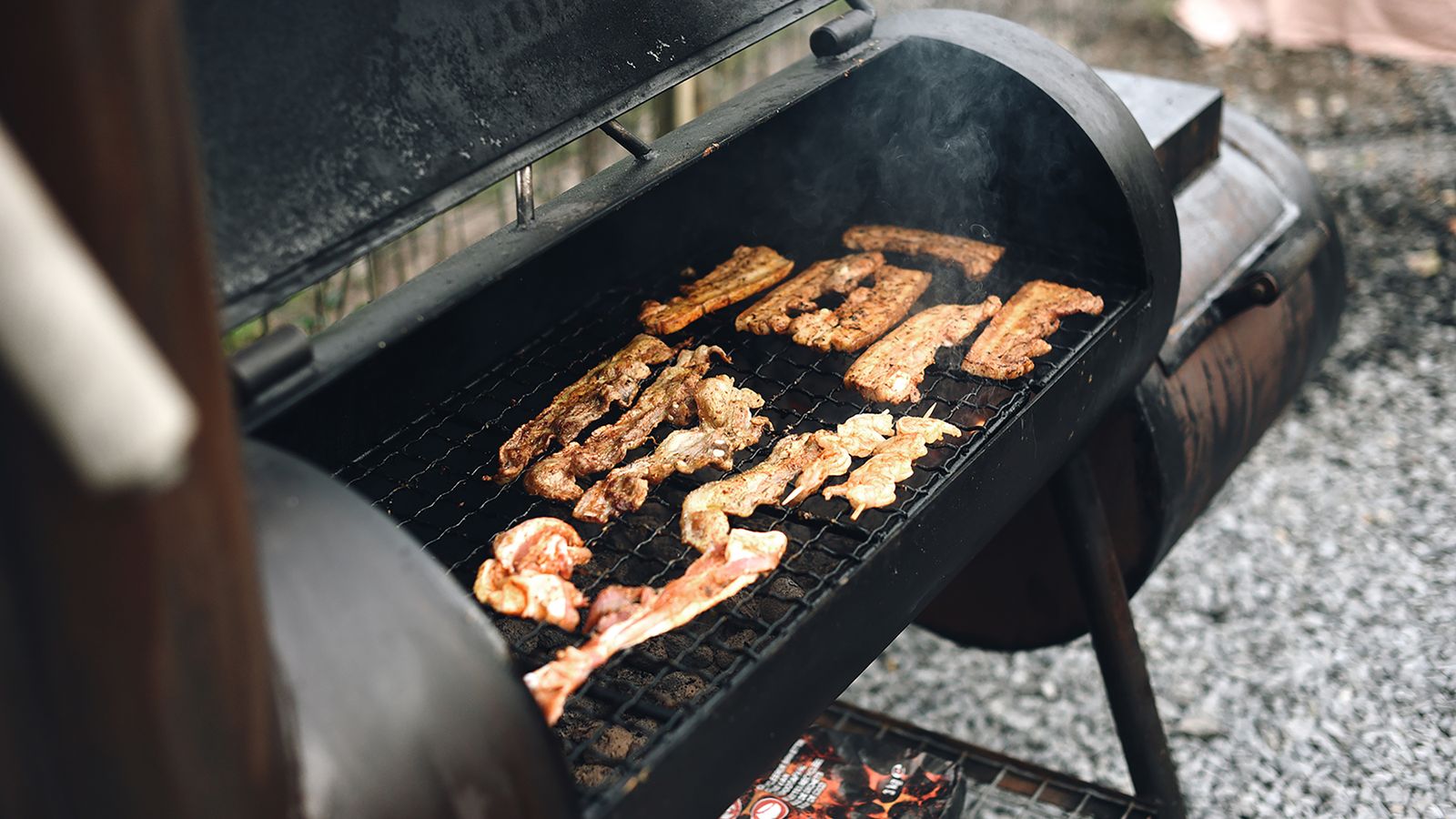
You know this cook: you spend the whole day crouched next to the smoker like it might run off, cracking a vent, slamming it shut, watching the temperature swing from 180 up to 320 and back down again, chasing it the entire time. By the time the meat's done you're exhausted and the fire never really settled. That's not smoking — that's wrestling a fire that actually wanted to behave.
Here's the thing: a charcoal fire wants to hold a steady temperature. Fed a consistent amount of air and fuel, it will happily cruise at 225–250°F for hours. All the chaos comes from us — over-adjusting, over-correcting, reacting to every little swing. Stop fighting it and set it up right, and you can walk away for an hour at a time.
Temperature is controlled by airflow, not fuel. Set the top (exhaust) vent mostly open and leave it, then run everything from the bottom (intake) vent. Light only a few coals at a time so the fire burns slow and steady, use a water pan to smooth out swings, and make small vent moves with 15–20 minutes of patience between them. That's the whole method.
The one principle: air controls the fire
A fire burns as hot as the oxygen it's fed. More air, hotter fire; less air, cooler fire. On a charcoal smoker, the intake (bottom) vent is your throttle — opening it feeds the coals more oxygen and raises the temperature; closing it starves them and lowers it. Nearly everything about holding a steady temperature comes down to controlling that airflow gently and then leaving it alone.
Set the exhaust and forget it
Leave the top exhaust vent mostly or fully open. Its job is to let smoke and spent air flow out so fresh air can be drawn in across the coals — you want that draft moving so the smoke stays clean. Choking the exhaust traps stale, bitter smoke around your food. Set it open, and make all your real adjustments down at the intake.
Build a slow, steady fire
The biggest trick is to not light all your charcoal at once. A whole chamber of lit coals gives you one giant spike and then a slow fade. Instead, light only a portion and let the rest catch gradually.
- Fill the firebox with unlit coals and drop a small batch of lit coals on top, or off to one side. The unlit coals ignite slowly, area by area, giving you hours of steady, even burn instead of a spike. (This is the idea behind the "minion" and "snake" methods.)
- Add a water pan next to or over the coals. Water is a thermal flywheel — it absorbs and releases heat slowly, smoothing out swings and keeping the chamber humid so the meat stays moist.
- Bring it up to temperature slowly with the intake open partway, and start closing it down as you approach 225–250°F. It's far easier to ease up to your target than to claw back down from an overshoot.
Small moves, then wait
This is where most people lose the day. A smoker reacts slowly — a vent change takes 15 to 20 minutes to show up on the thermometer. If you nudge the vent, watch for two minutes, see no change, and nudge it again, you'll stack up a half-dozen adjustments that all land at once and send the temperature lurching. Make one small change, then wait a full 15–20 minutes before touching anything else. Patience is the actual skill here.
Dialing it in
Once you know how to wait, correcting is simple:
- Running hot? Close the intake vent a little — a quarter at a time — and wait.
- Running cold or smoldering? Open the intake to feed the fire more air, and make sure you haven't choked the exhaust.
- Settled at 225–250°F? Leave it completely alone. It'll hold there for hours.
Wind, weather, and placement
The outside world affects your fire. Cold weather and especially wind push a charcoal smoker around — wind forces extra air through the vents and spikes the temperature, while cold air makes the smoker work harder to hold heat. Set up in a sheltered spot out of the wind, and expect to run the intake a touch more closed on a breezy day.
Trust the grate, not the dome
The thermometer built into most smoker lids reads the temperature up at the dome, which can be 15–25°F different from where your food actually sits on the grate. For real control, put a separate probe thermometer at grate level, right next to the meat. Then you're cooking to what the food feels, not what the lid guesses.
Skip: Opening the lid to peek every twenty minutes. Every time you lift it you dump the built-up heat and add fifteen minutes to the cook while the fire recovers. As the old pitmasters say — if you're lookin', you ain't cookin'. Set it, trust it, and leave the lid down.
Keep going
What 'The Stall' Is — and Why Wrapping Fixes It
Your smoke hits 160°F and just… stops for hours. Here's what's happening and what to do.
Wood Chips vs Chunks vs Pellets: What Actually Adds Smoke
Match the wood to your cooker — and learn why more smoke is usually worse, not better.
Your First Brisket: How Not to Ruin a $60 Piece of Meat
The three mistakes that turn a beautiful packer into a dry brick — and how to dodge all three.