
Your First Brisket: How Not to Ruin a $60 Piece of Meat
The three mistakes that turn a beautiful packer into a dry brick — and how to dodge all three.
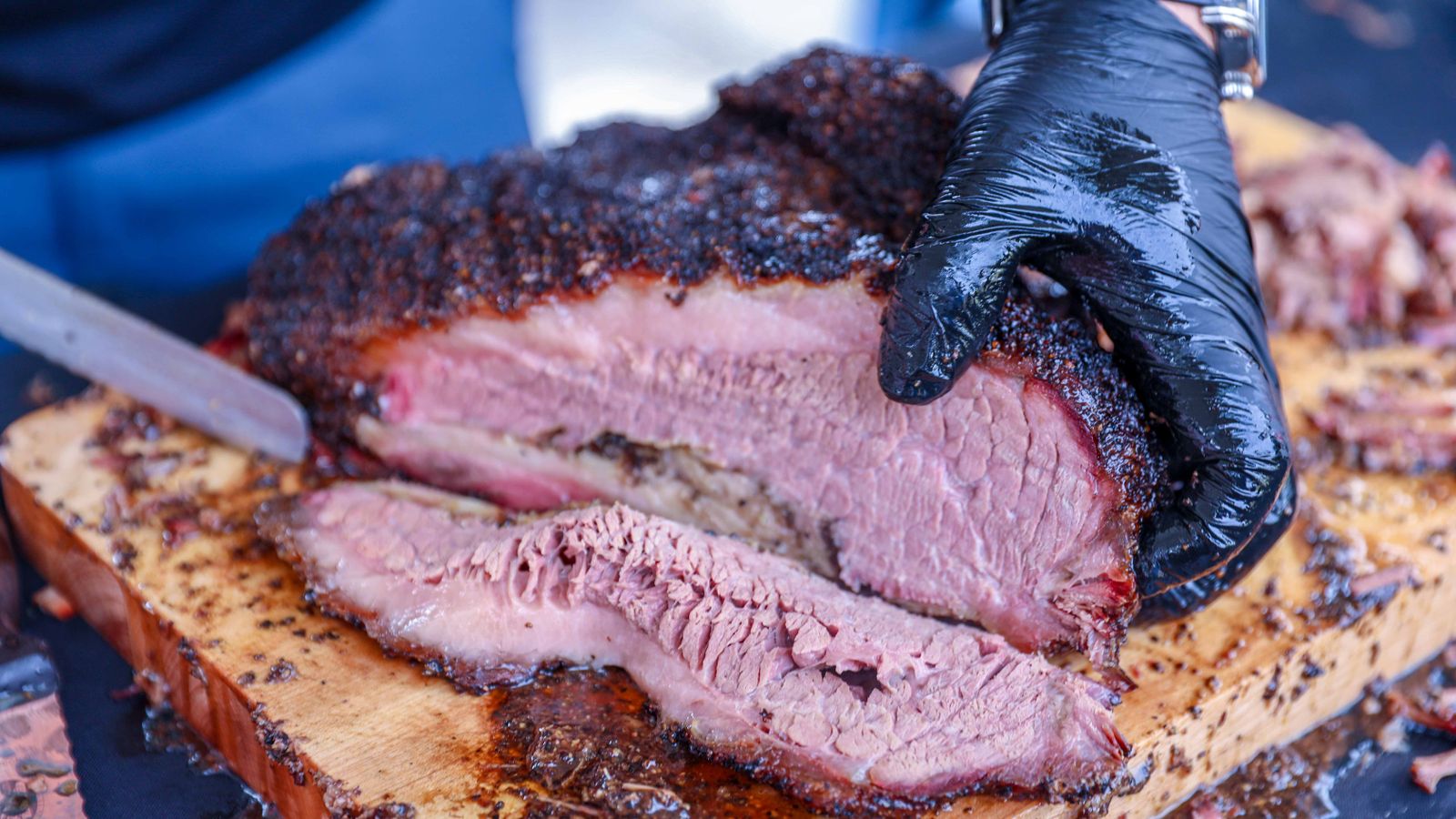
You've got a whole packer brisket in the fridge — twelve, maybe fourteen pounds of it — and you paid real money for it. Tomorrow you're up before the sun to cook the thing for the better part of a day, and there's a quiet fear in the back of your head: that you'll put in fourteen hours and slice into something closer to pot roast gone wrong than the glistening, smoke-ringed brisket you've been picturing.
Here's the good news. Brisket has a reputation as the Everest of barbecue, but almost every dry, tough, disappointing brisket comes down to the same handful of mistakes — and every one of them is easy to avoid once you understand what's actually happening inside the meat. Get the fundamentals right and brisket is genuinely forgiving. The rest is patience and a good thermometer.
Brisket is done by temperature and feel, never the clock. Cook it low (225–250°F), push through the stall by wrapping, pull it when a probe slides into the flat like warm butter (around 203°F), and — the step that separates good from great — rest it for at least an hour before you slice. Everything below is detail on those five moves.
What you're actually cooking
A brisket is the cow's chest muscle, and it works hard — which means it's packed with tough connective tissue (collagen) and very little of the tender, quick-cooking muscle you get in a steak. Cook it fast and that collagen seizes up and wrings the water out; you get a gray, chewy brick. Cook it low and slow and something better happens: over hours at a gentle temperature, the collagen slowly melts into gelatin, which coats the muscle fibers and gives you that rich, moist, sliceable texture. That conversion is the entire game, and it happens in a temperature window you can't rush.
A full "packer" brisket is really two muscles stacked together: the lean, even flat and the fattier, marbled point. They cook a little differently, and knowing which is which will matter when you slice.
Buy a better brisket than you think you need
Marbling is insurance. Those thin threads of fat inside the meat melt during the cook and baste it from within, so a well-marbled brisket forgives small mistakes that would dry out a lean one.
- Grade up if you can. USDA Choice is the reliable floor; Prime has more marbling and is worth the extra couple of dollars a pound for your first cook.
- Buy the whole packer (flat + point), not a trimmed flat on its own. The flat alone is the hardest cut in barbecue to keep moist — the point protects it.
- Do the bend test in the store: a good brisket is flexible and drapes over your hand. A stiff one usually cooks up tougher.
Trim it the night before
Trimming does two things: it removes fat that will never render, and it shapes the brisket so it cooks evenly instead of drying out at the thin edges. Do it cold — a brisket straight from the fridge is far easier to trim than a warm, floppy one.
- Take the fat cap down to about a quarter inch. You want a thin, even layer that renders and protects the meat — not a thick slab that blocks smoke and seasoning.
- Cut out the hard fat. There's a seam of dense, waxy fat between the flat and the point that never renders. Trim it away.
- Round off the thin edges and loose flaps. Anything paper-thin turns to charcoal long before the rest is done, so square things up.
Keep the trimmings. Those fat scraps render down into beef tallow you can brush on the wrap later or save for cooking. Nothing on a brisket has to go to waste.
Season simple
Central Texas built its name on brisket seasoned with nothing but coarse salt and coarse black pepper, roughly equal parts, and you honestly don't need more. The salt seasons and helps form the bark; the pepper builds crust and flavor. Lay on a heavy, even coat on every side — more than feels natural, because plenty of it renders off. Do it right before the cook, or the night before if you want the salt to sink in deeper.
Set the fire — and leave it alone
Run the smoker at a steady 225–250°F. Lower is more forgiving and gives a deeper smoke ring; the top of that range gets you done sooner. Either works — what matters is that it holds steady, because wild temperature swings are what turn out uneven brisket.
- Use a water pan. It steadies the temperature and keeps the air humid, which helps the surface take smoke and slows it from drying out.
- Chase thin blue smoke, not thick white. Billowing white smoke tastes bitter and ashy; you want a clean fire putting off smoke you can barely see. Use fewer wood chunks than you think, and give the fire enough air to burn clean.
- Fat side down, and stop worrying about it. On most cookers the heat comes from below, so fat side down shields the meat. The endless "up or down" debate barely changes the result.
The stall — and why you wrap
Somewhere around 150–170°F internal, the temperature will climb nicely and then just… stop. For hours. This is the stall, and it panics every first-timer. Nothing is broken. As the meat heats, moisture evaporates off the surface, and that evaporation cools the brisket almost exactly as fast as the fire heats it — the same way sweating cools you down. The meat is, quite literally, sweating.
You have two options. Wait it out for the best possible bark, which can add two or three hours. Or wrap — the "Texas crutch" — which stops the evaporation and lets the temperature climb steadily again.
- Butcher paper breathes a little, so it keeps more of your bark while still speeding things up. It's the standard for a reason.
- Foil is faster and holds the most moisture, but it softens the bark toward a braise. Fine if tenderness is all you're after.
Wrap when the bark is set — a deep mahogany that doesn't smudge when you touch it, usually right as the stall hits. After that the color's locked in, so there's no reason to keep it exposed.
Know when it's actually done
Here's where the thermometer earns its keep, and where "done by feel" finally makes sense. 203°F is the number everyone quotes, but it's a guide, not a law — the real test is how the probe feels going in.
- Start probing around 200°F in the thickest part of the flat. Slide a thermometer or a thin wooden skewer straight in.
- Feel for "like warm butter." When the probe slides in and out with almost no resistance, the collagen has rendered and it's done — usually between 200 and 205°F.
- If it still grabs the probe, keep going. An underdone brisket feels tight and tough. Give it more time; it will get there.
Rest it — the real secret
This is the step that separates a good brisket from a great one, and almost everyone rushes it. Wrap the brisket in a couple of old towels and set it in a dry, empty cooler for at least an hour — two or three is even better. A brisket fresh off the smoker is a pressurized bundle of hot juice; slice into it right away and all that liquid runs out onto the board, leaving the meat dry. The rest lets the juices redistribute and the temperature even out, so every slice stays moist.
The cooler hold is also your schedule insurance: a well-wrapped brisket stays serving-hot in a cooler for three or four hours. Cook it to done, rest it long, and serve when your guests actually show up — instead of praying it finishes on time.
Slice it right
You can nail everything else and still ruin the eating experience with a bad cut, because brisket lives and dies on being sliced against the grain — across the direction the muscle fibers run — so each bite stays short and tender.
- Separate the flat from the point. Their grains run in different directions, so you can't slice the whole thing one way.
- Slice the flat against its grain, about the thickness of a pencil. Too thin and it falls apart; too thick and it chews tough.
- Turn the point 90 degrees and slice it against its own grain — or cube it up for burnt ends.
If it went wrong
- Dry? Usually pulled too late, or sliced without resting. Trust the probe feel and give it the full rest next time.
- Tough and chewy? Underdone — the collagen never rendered. It needed more time, not more heat.
- No bark? Wrapped too early or kept too wet. Let the bark set before wrapping, and go easy on the spritz.
- Bitter, ashy taste? Dirty smoke. Less wood, more airflow, thin blue smoke only.
Skip: Mopping and spritzing every fifteen minutes. Every time you open the lid you dump heat and add time, and constant moisture keeps the bark from ever setting. Season it, set the fire, and leave it be until it's time to wrap.
Keep going
How to Reverse-Sear a Steak (The Method Steakhouses Skip Telling You)
Low first, hot last — the backwards order that gives you edge-to-edge pink and a hard crust.
Why Your Steak Sticks to the Grill (And the 30-Second Fix)
It's not the steak fighting you — it's three things you can fix before the next flip.
The Two-Zone Fire: The Setup That Fixes Burnt-Outside-Raw-Inside
One change to how you build the fire, and thick cuts stop torching before they cook through.